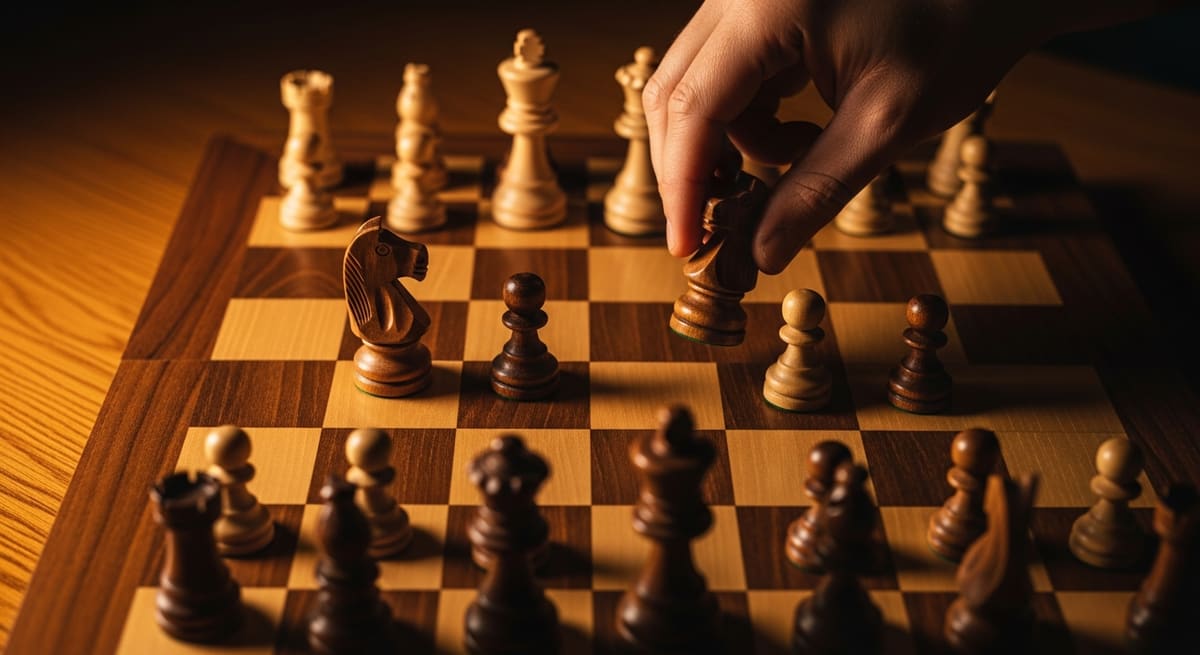
92 Chess Tips Every Beginner Should Know (Ranked by 20 AIs)
We asked 20 different AI models — from GPT-4 to Claude to Gemini — a simple question: "What are the most important chess tips for beginners?"
They returned 295 raw suggestions. After merging duplicates and near-duplicates across 25 topic clusters, we distilled them down to 92 unique chess tips, ranked by how many AIs recommended each one and how consistently they placed it.
The result? A definitive, consensus-driven list of every chess tip a beginner should know — ordered from universally agreed-upon fundamentals to advanced gems only a single AI mentioned.
How to read this list: Each tip shows its consensus rank, a brief explanation of why it matters, how many of the 20 AIs recommended it, and its confidence score. Tips near the top are universal fundamentals — every AI agrees on them. Tips further down are more specialized or niche.
Opening Principles
The opening sets the tone for the entire game. These tips focus on getting your pieces into the action quickly and safely.
Control the center of the board
👑 UnanimousThe center (d4, d5, e4, e5) gives your pieces maximum mobility and reach. A player who controls the center controls the game.
Castle early for king safety
👑 UnanimousCastling tucks your king behind a wall of pawns and activates your rook. Delay it too long and you risk getting caught in the center.
Develop your pieces quickly
🎯 Strong ConsensusEvery move you don't develop a piece is a move your opponent can use to get ahead. Get your knights and bishops out early.
Develop minor pieces early
🎯 Strong ConsensusKnights and bishops should enter the game before your queen or rooks. They're the workhorses of the opening.
Do not bring the queen out too early
🎯 Strong ConsensusThe queen is a target. Bringing her out early lets your opponent develop with tempo by attacking her.
Avoid moving the same piece repeatedly in the opening without necessity
🎯 Strong ConsensusEach move in the opening should ideally bring a new piece into the game. Moving the same piece twice wastes precious tempo.
Connect Your Rooks
Connected rooks defend each other and can double on files or ranks for devastating attacks.
Develop Knights Before Bishops
Knights generally have clearer optimal squares early on. Bishops often benefit from waiting to see where they're most effective.
Study common openings
You don't need to memorize 20 moves deep — understand the first 5-10 moves and the ideas behind your chosen openings.
Understand Openings
Understanding opening principles matters more than memorizing specific moves. Know why you play each move.
Value Tempo in the Opening
Every move counts in the opening. Wasting a tempo can give your opponent the initiative and leave you playing catch-up.
Play the Queen's Gambit
1.d4 d5 2.c4 is one of the most respected openings. It fights for the center immediately and leads to rich positions.
Learn a Few Openings Well Rather Than Many Superficially
It's better to understand 2-3 openings deeply than to know 10 openings superficially. Depth beats breadth for improvement.
Play the King's Indian Defense
The King's Indian Defense is a dynamic choice for Black that leads to aggressive counterattacking positions.
Learn Common Opening Traps
Knowing common traps (Scholar's Mate, Lasker Trap, etc.) helps you avoid them — and possibly catch an unprepared opponent.
Fianchetto
Fianchettoing a bishop (placing it on g2 or b2) controls long diagonals and is a key setup in many modern openings.
Tactics & Calculation
Tactics win games. These tips cover the patterns and calculation skills that let you spot winning moves.
Calculate Variations Systematically
⭐ Popular PickDon't just consider one move — systematically compare your candidate moves by calculating 2-3 moves deep on each line.
Understand Pins, Forks, and Skewers
⭐ Popular PickThese three tactical motifs are the bread and butter of chess tactics. Recognizing them instantly wins you material.
Utilize the Knight Fork
A knight can attack two (or more) pieces at once. Knight forks are one of the most common ways to win material.
Study basic checkmate patterns
Knowing how to deliver checkmate with basic material (queen, rook, two bishops) is essential — you don't want to stalemate a won game.
Think in Terms of Candidate Moves
Before choosing a move, identify 2-3 candidate moves and compare them. This systematic approach catches ideas you'd otherwise miss.
Queen Sacrifices for Attack
Sometimes sacrificing your queen opens up devastating attacks. Look for queen sacrifices that lead to checkmate or large material gain.
Learn Common Chess Patterns
Pattern recognition is what separates beginners from intermediates. The more patterns you know, the faster you find good moves.
Back-Rank Mate
When the back rank has no escape square for the king, a rook or queen can deliver checkmate. Always watch for this threat.
Don't Grab Material Without Calculating
Free material might be a trap. Always calculate before grabbing a pawn or piece — your opponent may have a combination prepared.
Use Sacrifices to Break Up Opponent's Position
A well-timed sacrifice can break open your opponent's king position, even at the cost of a piece or exchange.
En Passant
This special pawn capture is easy to forget. Remember: if an enemy pawn advances two squares past your pawn, you can capture it en passant.
Blunder-check before moving
Before pressing the clock, take one last look at your intended move. Does it hang a piece? Does it walk into a tactic?
Discovered Attack
Moving one piece reveals an attack from another piece behind it. Discovered attacks are among the most devastating tactics.
Always Check if a Check is Useful
Just because you can give check doesn't mean you should. Pointless checks waste tempo and can even help your opponent.
Strategy & Positional Play
Strategy is about long-term planning — controlling squares, managing your pawn structure, and coordinating your pieces.
Pawn Structure Management
🎯 Strong ConsensusYour pawns can't move backward. Every pawn move permanently changes the position — make them count.
Trade pieces when you are ahead in material
🎯 Strong ConsensusWhen you're up material, simplify the position by trading pieces. Fewer pieces on the board makes your advantage bigger.
Before every move, ask what your opponent threatens
🎯 Strong ConsensusBefore deciding your move, always look at your opponent's last move and ask: what does it threaten?
Use All Your Pieces — Avoid Idle Pieces
🎯 Strong ConsensusA piece sitting on its starting square isn't helping you. Make sure every piece has a job to do.
Maintain Pawn Structure in Front of King
The pawns in front of your castled king are your last line of defense. Moving them creates weaknesses your opponent can exploit.
Place Knights on Outposts
An outpost is a square protected by your pawns where your opponent can't challenge your knight. Knights thrive on outposts.
Use the Principle of Two Weaknesses
If you can force your opponent to defend weaknesses on both sides of the board simultaneously, they'll eventually crack.
Avoid moving pawns in front of your castled king unnecessarily
Pushing h3, g3, or f3 in front of your castled king can create long-term weaknesses that your opponent can target.
Look for pawn breaks
Pawn breaks (like d5 or f5) open lines for your pieces and can shatter your opponent's pawn structure.
Improve the Position of Your Worst Piece
Find the piece that's doing the least and find a way to bring it into the action. Your army is only as strong as its weakest member.
Avoid Premature Attacks
Launching an attack before your pieces are ready usually backfires. Complete your development first.
Avoid Doubled Pawns
Doubled pawns are slow, hard to advance, and can't defend each other. Avoid creating them unless you get compensation.
Preserve the Bishop Pair
Two bishops working together cover all the squares on the board. The bishop pair is a long-term advantage, especially in open positions.
Trade Wisely
Don't trade pieces without a reason. Good trades simplify when you're ahead, or eliminate your opponent's strong pieces.
Apply Prophylaxis
Prophylaxis means anticipating your opponent's plans and stopping them before they happen. Ask: what does my opponent want to do?
Avoid hanging pieces
A hanging piece is an undefended piece. Before every move, scan the board to make sure none of your pieces are hanging.
Plan ahead
Don't play move by move. Form a plan based on the position's features — even a bad plan is better than no plan.
Knights on the Rim Are Dim
Knights on the edge of the board control far fewer squares. Keep them centralized where they have maximum influence.
Attack the King
When the opportunity is right, coordinating your pieces against the enemy king can lead to decisive attacks and checkmates.
Knights Outperform Bishops in Closed Positions
In closed positions with locked pawns, knights can hop over obstacles while bishops get stuck. Choose your pieces accordingly.
Control Key Squares
Controlling important squares — especially central ones and outposts — limits your opponent's options while expanding yours.
Two Rooks Are Stronger Than a Queen
Two rooks can coordinate on ranks and files in ways a single queen can't. In many endgames, two rooks are stronger.
Use Pawns to Support Pieces
Pawns provide the structural support for your pieces. Place them to control key squares and support your knights and bishops.
Create and Exploit Weak Squares
Weak squares (not defended by pawns) in your opponent's position are targets. Place your pieces on them for lasting pressure.
Identify Good vs. Bad Bishops
A bishop blocked by its own pawns is 'bad.' Recognize this and trade it off, or reorganize your pawns to free it.
Play Positional Chess
Positional chess focuses on small, lasting advantages rather than flashy tactics. Master quiet improvements and piece placement.
Double Rooks on the Same File
Two rooks stacked on the same open file create enormous pressure. The front rook controls; the back rook supports.
Attack the Opponent's Weaknesses
Target your opponent's weak pawns, exposed king, or poorly placed pieces. Concentrated pressure on weaknesses creates winning chances.
Opposite Colored Bishops Favor Attacker
When you have opposite-colored bishops, the attacking side has an advantage because the defender's bishop can't contest the key squares.
When behind in material, seek complications
When you're down material, keep the position complicated. More pieces and tension on the board mean more chances for your opponent to go wrong.
Evaluate Bishop vs Knight Carefully
The relative value of a bishop vs. a knight depends on the position. Open positions favor bishops; closed ones favor knights.
Avoid pawn grabbing
Grabbing random pawns with your queen often leads to getting your queen trapped or falling behind in development.
Understand Piece Activity Over Material
A well-placed piece can be worth more than an extra pawn. Activity and coordination often trump material count.
Convert Space to Piece Activity
If you have a space advantage, use the extra room to maneuver your pieces to better squares and launch an attack.
Understand Initiative
The initiative means your opponent is reacting to your threats rather than creating their own. Maintaining it keeps you in control.
Understand IQP Positions
An Isolated Queen's Pawn can be a strength (active pieces, open lines) or weakness (target for attack). Learn to play both sides.
Endgame Mastery
Many games are decided in the endgame. Knowing these fundamental endgame concepts can turn a draw into a win.
Activate your rooks on open or semi-open files
⭐ Popular PickRooks are powerful on open files where they can exert pressure deep into your opponent's position.
Activate Your King in the Endgame
🎯 Strong ConsensusIn the endgame, your king becomes a powerful attacking piece. Bring it to the center to support your pawns.
Learn Basic Endgames
🎯 Strong ConsensusKing and pawn vs. king, rook endgames, and basic mates are positions you'll see in almost every game. Know them cold.
Push Passed Pawns
🎯 Strong ConsensusA passed pawn (no opposing pawns can block it) is a powerful weapon. Push it toward promotion with support.
Use the Opposition in King and Pawn Endgames
🎯 Strong ConsensusThe opposition is when kings face each other with one square between them. The player NOT to move has it — and that's often decisive.
Utilize the 7th Rank
A rook on the 7th rank can attack pawns from behind and restrict the enemy king — often worth more than a pawn.
Recognize Zugzwang
Zugzwang is when any move you make worsens your position. Recognizing it can help you force wins in the endgame.
Lucena Position
The Lucena position is the most important rook endgame technique. Learn the 'bridge' method to convert a winning position.
Philidor Position
The Philidor position teaches you how to defend a rook endgame when down a pawn. An essential endgame technique to know.
Apply the Rule of the Square
The rule of the square tells you instantly whether a king can catch a passed pawn. No calculation needed — just count squares.
Follow the Tarrasch Rule
Tarrasch's rule says: place rooks behind passed pawns (yours or your opponent's) so they gain power as the pawn advances.
Improvement & Habits
Getting better at chess is about more than just knowing the rules — it's about building the right habits and mindset.
Analyze Your Games After Playing
🎯 Strong ConsensusReviewing your games — especially losses — is how you find recurring mistakes and fix them.
Practice Tactics Daily
🎯 Strong ConsensusSolving 10-15 tactical puzzles a day builds your pattern recognition faster than any other training method.
Manage Time Wisely
Good time management means spending more time on critical positions and less on moves you're already familiar with.
Play Longer Time Controls to Improve
Playing longer games (15+ minutes) forces you to think deeply, which builds better chess habits than blitz alone.
Be Patient
Not every position calls for action. Sometimes the best move is to improve your worst piece and wait for your opponent to overextend.
Respect the Principles
Chess principles exist for a reason. While you should know when to break rules, respect the fundamentals as a beginner.
Join a Chess Community
Playing and discussing chess with others accelerates improvement. Online communities, clubs, and study groups all help.
Avoid Blunders with the 'Touch Move' Rule
In competitive play, touching a piece means you must move it. This rule builds the discipline of thinking before acting.
Use Chess Engines
Engine analysis shows you what you missed and helps you understand where your thinking went wrong. Use it after the game.
Focus on Your Weaknesses
Targeted practice on your weak areas — whether it's endgames, calculation, or openings — is the fastest path to improvement.
Play the Board, Not the Player
Focus on the position on the board, not your opponent's rating or reputation. Play the best moves regardless of who you're facing.
Play Against Stronger Opponents
Playing someone better than you exposes your weaknesses and forces you to raise your game. Embrace the challenge.
Learn from Losses
Every loss contains a lesson. Review what went wrong, find the critical moment, and learn from it.
Learn from Strong Players
Studying games by grandmasters and strong players gives you a library of ideas, patterns, and strategic concepts to draw from.
Review Chess Strategies
Regularly reviewing strategic concepts keeps them fresh and helps you apply them under pressure in your own games.
See the Full Interactive Rankings
Explore all 92 tips with detailed consensus data, AI voting breakdowns, and filtering tools on our interactive ranking page.
View Full Chess Rankings →The Bottom Line
When 20 AI models independently agree that "Control the center" is the #1 chess tip — with 100% consensus — you know it's not just a cliché. It's a fundamental truth of chess.
Whether you're a complete beginner or an improving player, this list gives you a roadmap for development: start with the unanimously agreed-upon basics at the top, master them, and then work your way down to the more nuanced strategic and positional concepts.
The beauty of this consensus approach is that it filters out personal bias. No single AI, coach, or author decided this ranking — 20 different models independently converged on the same fundamentals. That's as close to an objective "most important chess tips" list as you can get.